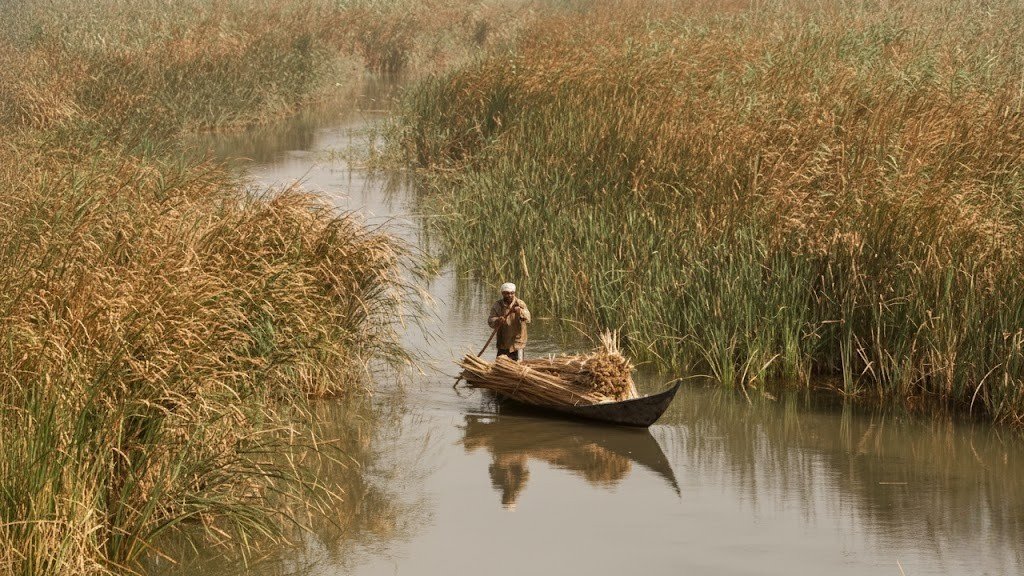
Set in a mountain valley in northern Iraqi Kurdistan, Dohuk offers a cooler climate, rich heritage, and gateway access to the high Zagros mountains. This practical first-time travel guide covers transport routes, checkpoints, local highlights, dining, and verified day trips to Lalish and Amadiya.
A first visit to Dohuk: practical city itinerary, transport, and locally verified stops
Set in a mountain valley between the Spî (White) and Zawa ridges in northern Iraqi Kurdistan, Dohuk (Kurdish: Dihok, Arabic: دهوك, Syriac: Beth Nohadra) has a cooler mountain climate, a long history, and a slower pace than the region's larger cities (VisitKurdistan). Erbil and Sulaymaniyah draw most international travelers, but Dohuk is the main access point to the high Zagros mountains and the northern borderlands of Iraq (Against the Compass).
Unlike the flat plains of central and southern Iraq, Dohuk sits among limestone cliffs, seasonal streams, and terraced orchards. The city grew as a trade stop where caravans paid transit duties. Local tradition traces the name to the Kurdish words du (two) and hok (a measure) for wheat (Wikipedia: Duhok). Today Dohuk has a mixed population of Kurmanji-speaking Kurds, Assyrian and Chaldean Christians, and Yazidis (Al Jazeera). It works well both as a base in its own right and as a staging point for day trips to the Yazidi sanctuary at Lalish or the mountain citadel of Amadiya.
Getting to Dohuk: routes, transport, and checkpoints
Dohuk has regular road connections from Erbil and from the Turkish border at Zakho. The city does not have an active commercial airport, so all visitors arrive by road (VisitKurdistan).
Traveling from Erbil (Hawler)
The road trip from Erbil to Dohuk spans roughly 150 to 170 kilometers and takes 2.5 to 3 hours, depending on checkpoint lines (VisitKurdistan).
- Shared taxis. Four-passenger sedans leave throughout the morning and early afternoon from Erbil's Northern Garage (Garaj-e Shimal, also called the Dohuk Garage). A seat costs 15,000 to 20,000 IQD (roughly $12 to $15), and the car leaves once full (Adventures of Nicole).
- Private taxi. If you want the car to yourself or have bulky luggage, you can hire an entire taxi for roughly 60,000 to 75,000 IQD ($45 to $55) (Wikivoyage: Dahuk).
- Self-driving. Drivers follow the highway through Kalak and Bardarash along the Ba'adre-Etit dual carriageway, passing north of central Mosul (Wikipedia: Duhok). Rental cars in Erbil cost around $30 per day; watch for sharp mountain turns and livestock on the road (Beyond the Bucketlist).
Arriving from Turkey (Ibrahim Khalil / Zakho)
Travelers crossing from Turkey enter at the Ibrahim Khalil / Habur border gate near Zakho, about 50 kilometers northwest of Dohuk. Shared taxis and minibuses run from transport ranks in Zakho to central Dohuk, taking 45 to 60 minutes and costing 5,000 to 10,000 IQD ($4 to $8) (Wikivoyage: Dahuk).
Checkpoints and visa logistics
The Kurdistan Regional Government operates security checkpoints (saytara) staffed by Asayish and Peshmerga personnel along provincial highways (VisitKurdistan: Practical Travel Tips).
- Keep your original passport and entry stamp within reach. Guards inspect foreign passports regularly (Beyond the Bucketlist).
- Visa limits. Western passport holders arriving through Erbil International Airport or the Turkish border usually receive a Kurdistan Regional Government (KRG) entry stamp or eVisa valid for 30 days (VisitKurdistan: Practical Travel Tips). This regional visa is valid only in Dohuk, Erbil, and Sulaymaniyah governorates. It does not allow travel into federal Iraqi territory, including central Mosul or Baghdad, which requires a separate federal Iraqi visa (VisitKurdistan: Practical Travel Tips).
Navigating the city: local transport
Dohuk's city center is compact, walkable, and organized along main streets including Kawa Road, Barzani Street, and the KRO corridor (Wikivoyage: Dahuk).
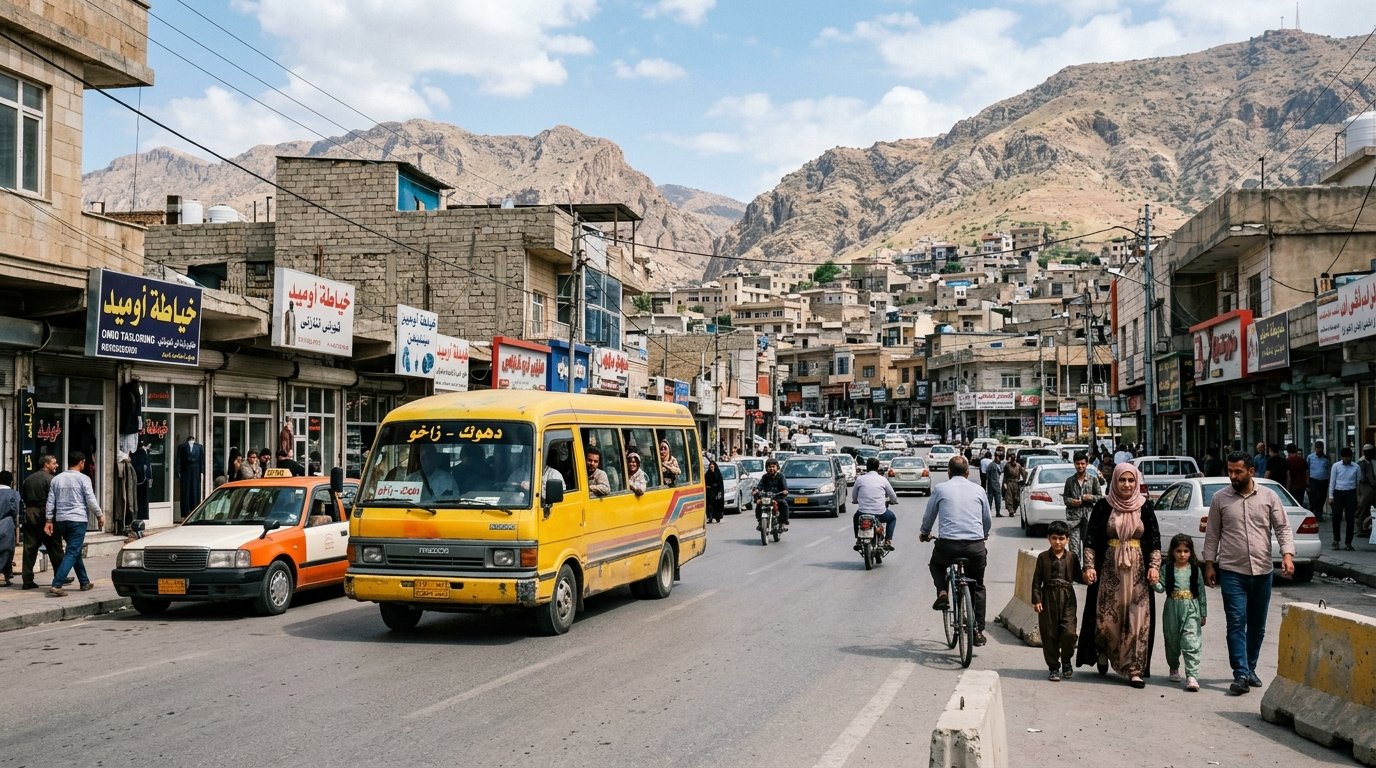
- City taxis. Taxis run throughout the city. Short rides across downtown usually cost 3,000 to 4,000 IQD ($2 to $3) (Wikivoyage: Dahuk). State your stop and confirm the fare before getting in.
- Shared minibuses (sarbis). Yellow vans follow set routes connecting outer residential areas and hospitals to the central bazaar, charging 500 to 1,000 IQD per trip (Wikipedia: Duhok).
- Intercity garage. For trips to Amadiya, Akre, or back to Erbil, shared taxis gather along Kawa Road near the central currency exchange market (bursa) and at the designated municipal garages (Wikivoyage: Dahuk).
Locally verified city sights and experiences
The main sights in town center on valley walking paths, Neo-Assyrian cliff carvings, and the markets around the Great Mosque (VisitKurdistan).
1. Dohuk Dam and Lake (Sadd Dohuk)
Located 3 kilometers north of the center, the Dohuk Dam forms a reservoir between limestone bluffs (VisitKurdistan). A paved walkway runs along the edge, with tea kiosks, picnic spots, and benches overlooking the water (Wikivoyage: Dahuk). Local families gather here on Friday afternoons with sunflower seeds and tea, while spring mornings are quiet with views of snow-dusted peaks to the north (VisitKurdistan).
2. Galli Dohuk and river promenade (Rubar Dohuk)
The Galli gorge connects the town center to the dam basin. Walkways follow the Rubar Dohuk waterway past terraced gardens, tea stalls, and small artificial cascades where people walk in the evening to cool off (Wikivoyage: Dahuk).
3. The central bazaar and Great Mosque
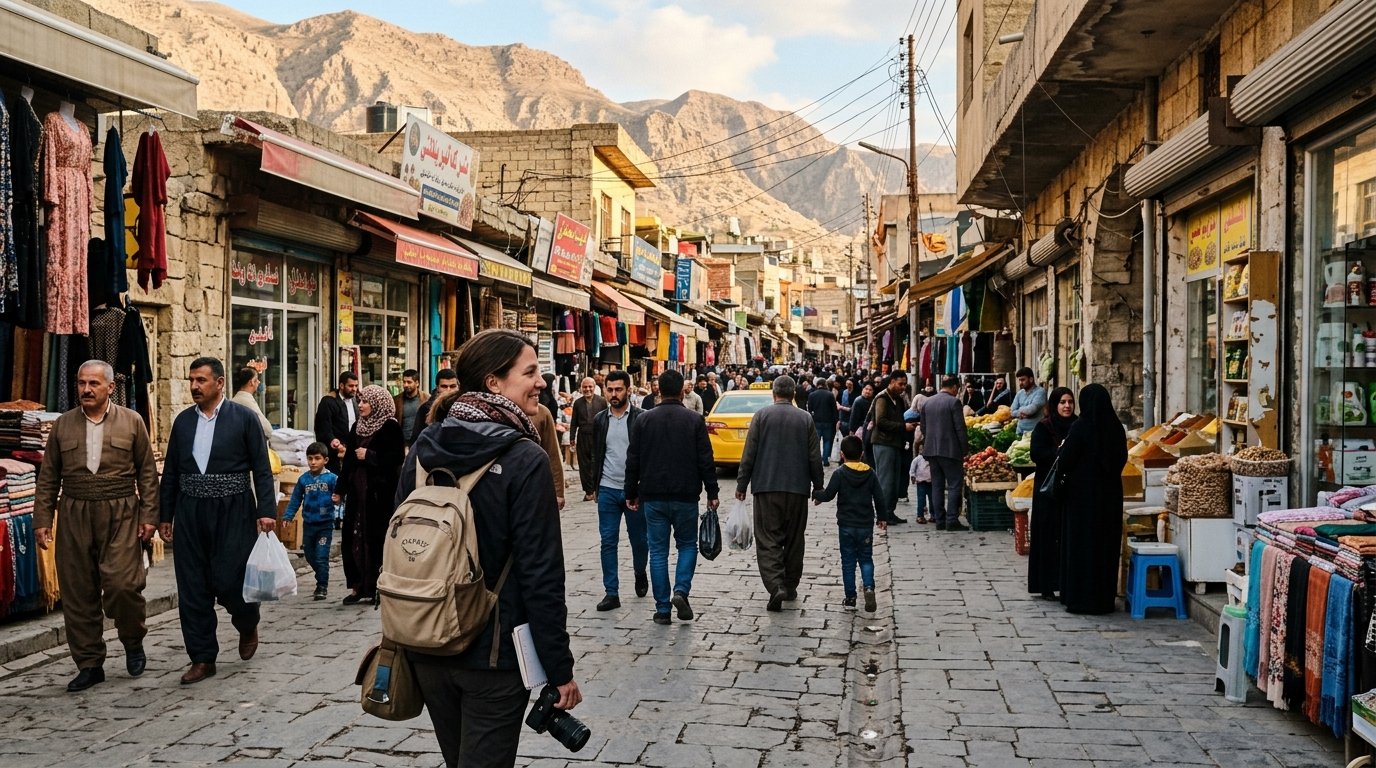
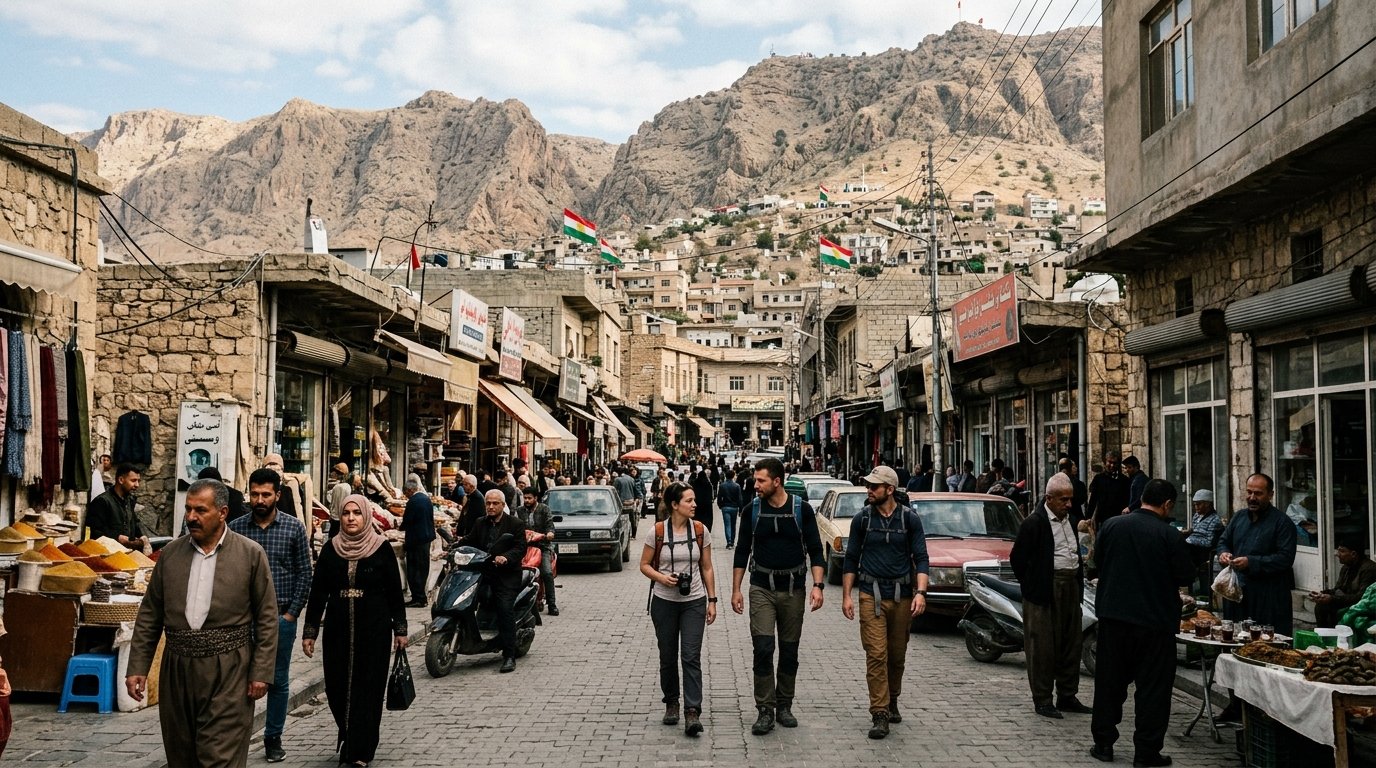
In the center of town sits Dohuk's covered bazaar (Qaisariya), built around the Great Mosque (Wikivoyage: Dahuk). The market caters to locals rather than tourists (VisitKurdistan). Stalls sell rolls of Kurdish dress fabric, hand-hammered copper pots, dark mountain honey, wild sumac, dried figs, and walnuts from orchards around Amadiya (VisitKurdistan). Outdoor tea stalls around the perimeter pour hot tea from stacked samovars.
4. Maltai rock reliefs (Halamata Cave)
About 7 kilometers southwest of the center on the Malta hills are the Maltai Reliefs (Wikipedia: Duhok). Carved into the limestone cliffs between 704 and 681 BCE under Neo-Assyrian King Sennacherib, the four outdoor panels show Sennacherib in procession before Mesopotamian gods, including Ashur, Mullissu, and Sin, who stand atop sacred animals (Arabic Wikipedia: دهوك). The carvings overlook the course of ancient canals Sennacherib built to carry water to Nineveh (Al Jazeera). Reaching the panels requires a short, rocky scramble up the hillside, so wear sturdy shoes.
5. Historic churches and multiethnic heritage
Several historic churches stand in and around the center, representing the city's Assyrian and Chaldean Christian communities. The Church of Saint Ith-Alaha (Mar Ith Llaha) is among the oldest consecrated Christian sites in the valley (Wikivoyage: Dahuk), and the Cathedral of Mar Narsai is the main hub for the local Assyrian congregation (Wikipedia: Duhok). On April 1, Dohuk hosts street parades and folk dances for Akitu (Assyrian New Year or Kha b-Nisan), drawing Assyrians from across the diaspora (Wikipedia: Duhok).
6. Mount Zawa viewpoint and teleferic
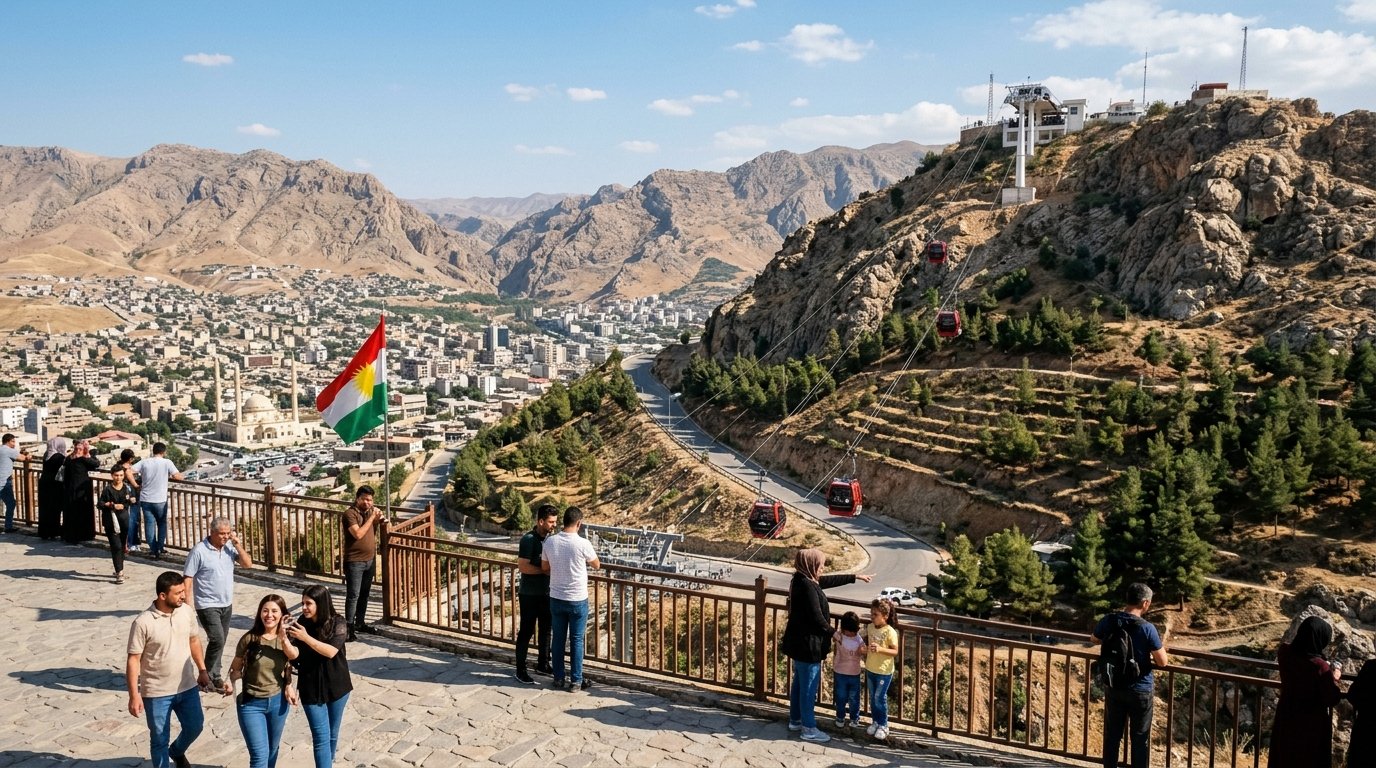
Mount Zawa rises along the southern edge of town, with clear views across the valley, the university campus, and the Nineveh plains (VisitKurdistan). You can reach the top by road or by taking the cable car (teleferic) from the Dream City amusement area (Wikivoyage: Dahuk). The ridge is busiest around sunset, when breezes cool the hill and city lights turn on below.
Dining and local flavors: verified food stops
Dohuk's food culture reflects Kurdish and Christian mountain cooking, with an emphasis on grilled meats, flatbreads, and regional stews (Wikivoyage: Dahuk).
- Bazaar kebabs and stews. In the market district between the bazaar alleys and the Khani Hotel, grills such as Khan Kebab and Al Andalus cook skewered lamb over charcoal, served with fresh naan, roasted tomatoes, parsley, and pickled turnip (Wikivoyage: Dahuk).
- Local dishes. Watch for Dohuk-style dolma (grape leaves, onions, and squash stuffed with spiced rice and lamb ribs), sour bulgur kubba in broth, and slow-cooked paja (sheep trotters and head) over torn bread (Wikivoyage: Dahuk; Wikipedia: Duhok).
- Sit-down and garden restaurants. Along the KRO corridor, places like Wooden House serve hot and cold mezze platters and grilled meats (Wikivoyage: Dahuk). Near the gorge, spots like Dohuk Paradise have outdoor patio tables under trees (Wikivoyage: Dahuk).
- Juice stalls and coffee. Vendors in the bazaar press fresh pomegranate (hanar) and grape juice into chilled plastic bags or cups (Wikivoyage: Dahuk). For espresso and a quiet place to work, Elpida Cafe in Masiki Du is smoke-free (Wikivoyage: Dahuk).
- Social club gardens. Christian social clubs, such as the Assyrian Club and the Doctors Club near Ashty Road, have outdoor garden tables serving grilled dinners, mezze, and beer or spirits (Wikivoyage: Dahuk).
Recommended itineraries
The 1-day Dohuk city itinerary
- Morning. Start with flatbread, date syrup, and tahini (Beyond the Bucketlist), then walk through the covered alleys of the central bazaar. Browse the Kurdish textile stalls and pick up local dried fruit and walnuts (VisitKurdistan). From the market, walk over to see the stone facade of Mar Ith-Alaha Church (Wikivoyage: Dahuk).
- Afternoon. Take a short taxi north to Dohuk Dam. Walk along the lakeside path, get tea at an open-air kiosk, and head down into the Galli gorge walkway (Wikivoyage: Dahuk).
- Late afternoon. Take a taxi 7 kilometers southwest to the Maltai cliffs to see Sennacherib's 2,700-year-old rock carvings before the light drops (Wikipedia: Duhok).
- Evening. Head up Mount Zawa by cable car or road for views across the valley (VisitKurdistan), then return downtown for kebabs at Khan Kebab or mezze at Wooden House (Wikivoyage: Dahuk).
The 2-day extended hub itinerary (essential excursions)
Dohuk also works well as a base for day trips to historical sites across the governorate (VisitKurdistan).
- Day 2 morning: Lalish pilgrimage valley (45 minutes southeast). Visit Lalish, the spiritual center and main shrine of the Yazidi community (VisitKurdistan: Lalish). Located in a quiet wooded valley, the complex has distinctive conical stone spires over the tomb of Sheikh Adi (VisitKurdistan: Lalish). Etiquette: You must take off your shoes at the entrance and walk barefoot across the stone grounds. Do not step on any doorway thresholds, keep your shoulders and knees covered, and keep voices down (VisitKurdistan: Lalish; Adventures of Nicole).
- Day 2 afternoon: Amadiya (Amedi) citadel mesa (1 to 1.5 hours northeast). Drive northeast toward Amadiya, a historic town built on an isolated limestone mesa at an elevation of 1,400 meters (VisitKurdistan: Amadiyah). Walk through the carved stone Bahdinan (Mosul) Gate, take in the views down into the valleys, visit the remains of the medieval Qubahan madrasa, and stop at the Sulav mountain springs on the drive back (VisitKurdistan: Amadiyah; Al Jazeera).
Practical essentials: money, seasons, and lodging
Currency and payments
- The local currency is the Iraqi dinar (IQD) (VisitKurdistan: Practical Travel Tips).
- Dohuk runs mostly on cash. International cards are rarely taken outside large properties like the Rixos (VisitKurdistan: Practical Travel Tips).
- Carry clean, uncreased US dollar bills (crisp series 2013 or newer) and trade them for dinars at the money market (bursa) on Kawa Road near the bazaar (Wikivoyage: Dahuk; VisitKurdistan: Practical Travel Tips).
Best season to visit
- Spring (March to May). The best window for travel in the region (VisitKurdistan: Practical Travel Tips). Hills are green, streams run fast, and wildflowers cover the valley slopes (Beyond the Bucketlist). On March 21, the Newroz holiday brings hilltop bonfires and celebrations (Wikipedia: Duhok).
- Autumn (September to November). Sunny daytime temperatures and cool evenings make this a good time for walking and road trips (VisitKurdistan: Practical Travel Tips).
- Summer and winter. Summers (July and August) regularly pass 40°C (104°F) during the day (Wikipedia: Duhok), though nights are cooler than in Baghdad. Winters (December to February) bring cold rain, sharp winds, and snow on higher passes (VisitKurdistan: Practical Travel Tips).
Where to stay
Downtown Dohuk has mainly functional mid-range hotels and small guesthouses (VisitKurdistan):
- Hotel Bircin. Near Kawa Road, with private bathrooms and included breakfast (Wikivoyage: Dahuk).
- Hotel Jotyar. On Azad Hospital Street, offering dependable mid-range rooms (Wikivoyage: Dahuk).
- Kristal Hotel. A central budget and mid-range choice popular with overland travelers (Adventures of Nicole).
- Hotel Paris. A basic budget option near the Ahmad Khan statue (Wikivoyage: Dahuk).
- Rixos Al Nasr Dohuk. South of downtown for travelers wanting full-service hotel facilities (Wikivoyage: Dahuk).
Sources
- VisitKurdistan, "Duhok Travel Guide | History, Things to Do & Tips", https://visitkurdistan.com/duhok/ (Accessed April 2026).
- VisitKurdistan, "Practical Travel Tips", https://visitkurdistan.com/travel-tips/ (Accessed April 2026).
- VisitKurdistan, "Amadiyah Travel Guide | History, Things to Do & Tips", https://visitkurdistan.com/amadiyah/ (Accessed April 2026).
- VisitKurdistan, "Lalish Travel Guide | Yazidi Holy Site, History & Tips", https://visitkurdistan.com/lalish/ (Accessed April 2026).
- Al Jazeera Encyclopedia, "دهوك.. بوابة كردستان العراق على تركيا" [Dohuk: Iraqi Kurdistan's Gateway to Turkey], https://www.aljazeera.net/encyclopedia/2014/12/28/%D8%AF%D9%87%D9%88%D9%83-%D8%A8%D9%88%D8%A7%D8%A8%D8%A9-%D9%83%D8%B1%D8%AF%D8%B3%D8%AA%D8%A7%D9%86-%D8%A7%D9%84%D8%B9%D8%B1%D8%A7%D9%82-%D8%B9%D9%84%D9%89-%D8%AA%D8%B1%D9%83%D9%8A%D8%A7 (Accessed April 2026).
- Wikipedia (English), "Duhok", https://en.wikipedia.org/wiki/Duhok (Accessed April 2026).
- Wikipedia (Arabic), "دهوك" [Dohuk], https://ar.wikipedia.org/wiki/%D8%AF%D9%87%D9%88%D9%83 (Accessed April 2026).
- Wikivoyage, "Dahuk travel guide", https://en.wikivoyage.org/wiki/Dohuk (Accessed April 2026).
- Adventures of Nicole, "10 Day Iraqi Kurdistan Itinerary", https://adventuresoflilnicki.com/iraqi-kurdistan-itinerary/ (Accessed April 2026).
- Beyond the Bucketlist, "How to Plan an Epic Iraqi Kurdistan Road Trip (Full Itinerary)", https://beyondthebucketlist.co/iraqi-kurdistan-road-trip/ (Accessed April 2026).
- Against the Compass, "Places to visit in Kurdistan Iraq: 2-week itinerary", https://againstthecompass.com/en/places-visit-iraqi-kurdistan-itinerary/ (Accessed April 2026).
❓Frequently Asked Questions
Here are answers to frequently asked questions about the content above
You can take a shared taxi from Erbil's Northern Garage (Garaj-e Shimal). Shared four-passenger sedans leave once full throughout the day, costing between 15,000 and 20,000 IQD ($12 to $15 USD) per seat. The journey takes around 2.5 to 3 hours over modern highways via Bardarash. Alternatively, you can hire an entire private taxi for roughly 60,000 to 75,000 IQD.
Yes. Dohuk is part of the Kurdistan Autonomous Region, so an official KRG visa on arrival or eVisa is fully valid. However, this regional visa is not valid for travel into Federal Iraqi territory such as Mosul or Baghdad; moving beyond KRG-controlled checkpoints into Federal Iraq requires a separate Federal Iraqi visa.
The Maltai (Halamata) reliefs are four ancient rock panels carved into the cliffs roughly 7 kilometers southwest of Dohuk. Commissioned during the reign of Neo-Assyrian King Sennacherib (704–681 BCE), they depict deities standing on ceremonial beasts. You can reach the base by taking a 10-minute taxi from central Dohuk, followed by a short, steep uphill hike along the hillside.
Spring (March through May) is the ideal time to visit, characterized by mild daytime temperatures, blossoming wildflowers, green hills, and vibrant Newroz celebrations on March 21. Autumn (September to November) is also pleasant with clear skies and crisp evenings. Summer midday temperatures often exceed 40°C (104°F), while winters can be cold and wet.
Lalish is the holiest sanctuary of the Yazidi religion, located roughly 45 minutes southeast of Dohuk. When visiting, you must remove your shoes at the entrance and walk barefoot across the sacred grounds, avoid stepping on doorway thresholds, dress conservatively with covered knees and shoulders, and behave quietly and respectfully.
You must carry cash in Iraqi Dinars (IQD). Dohuk is almost entirely a cash-based economy; credit cards are rarely accepted outside luxury international hotels. You can easily exchange clean US Dollars at favorable exchange rates with registered money changers in the central bazaar area along Kawa Road.