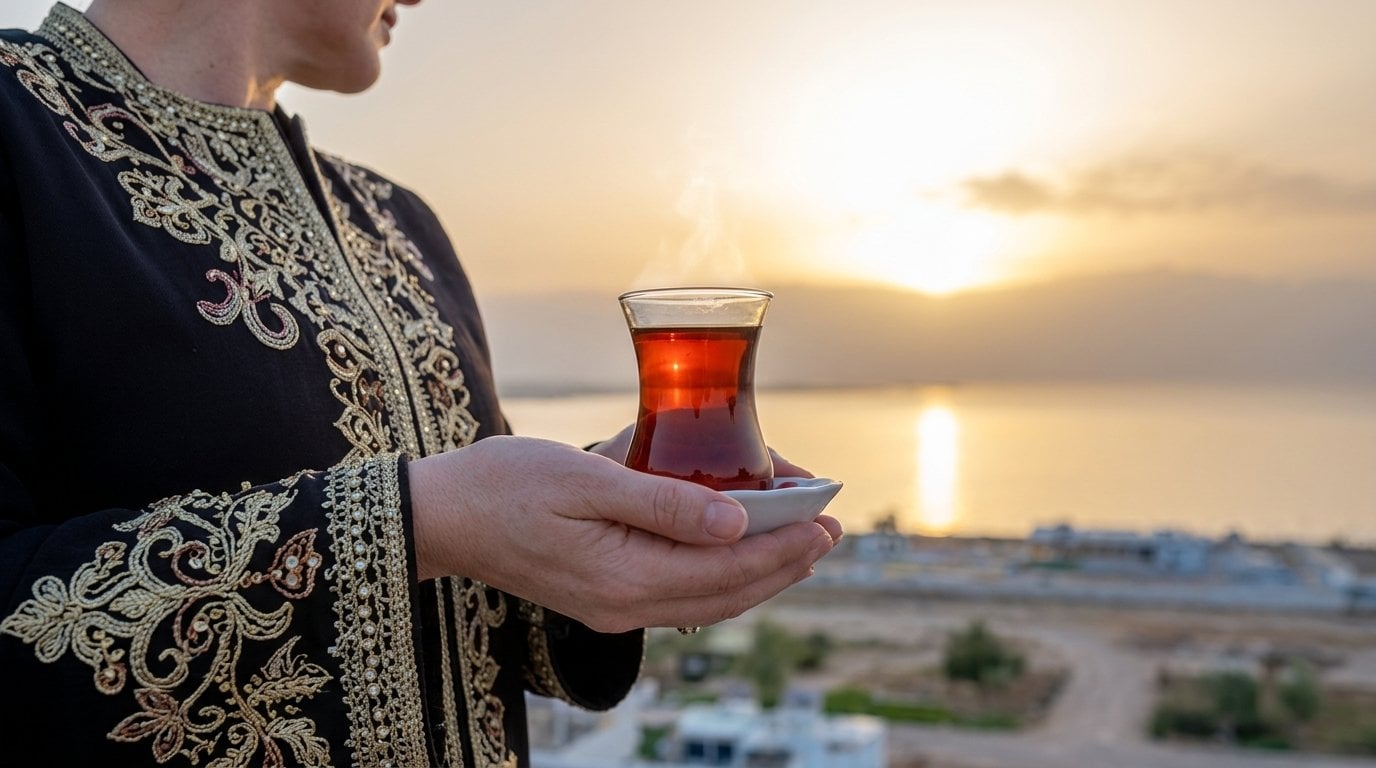
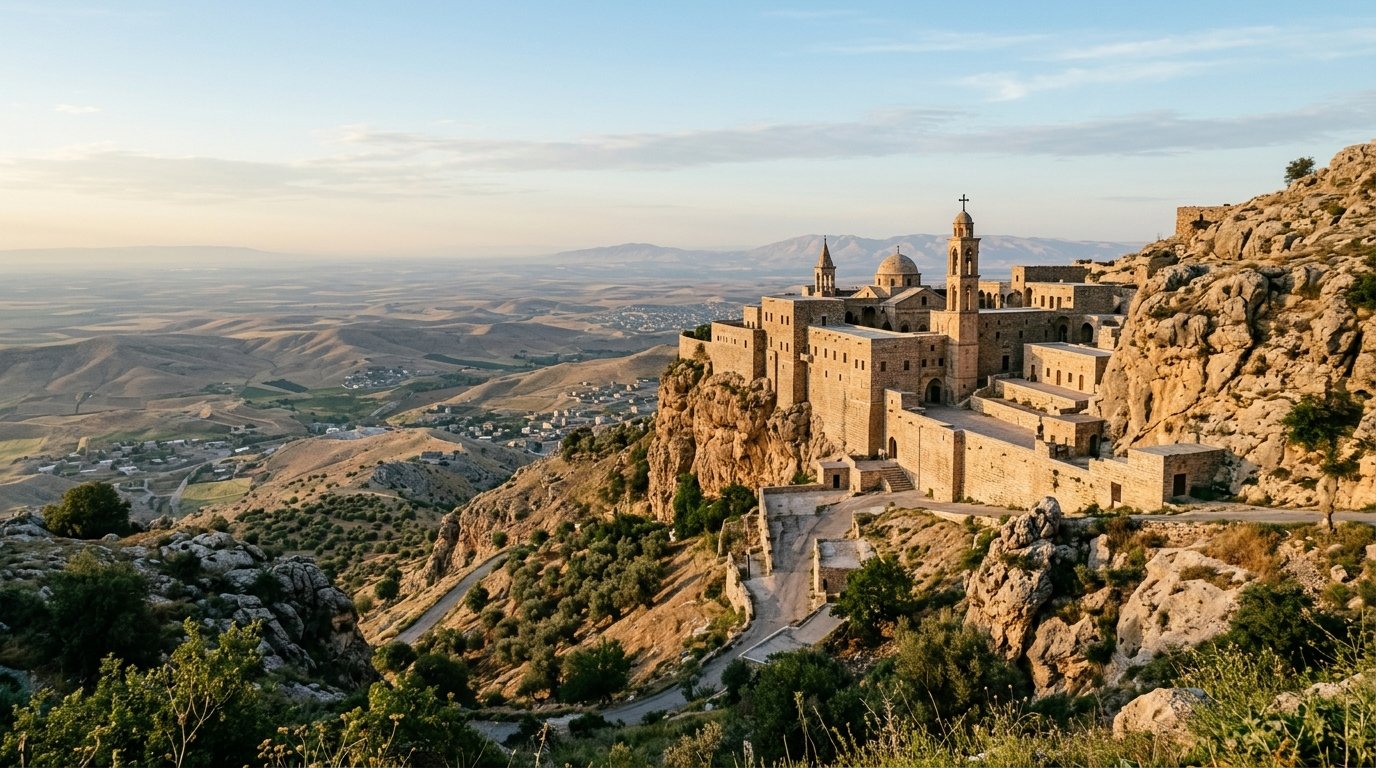
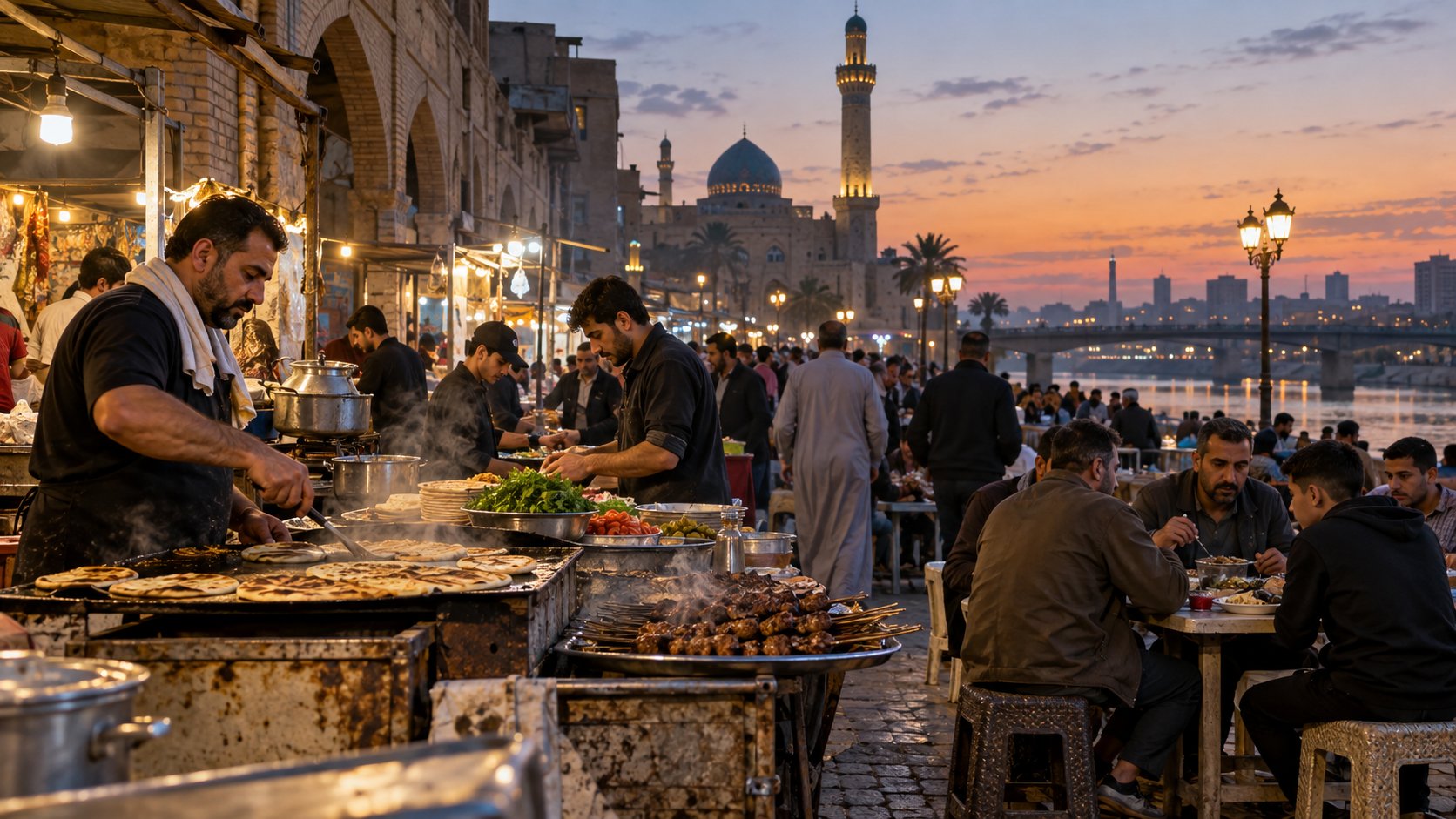
Every April 1, northern Iraq comes alive with Akitu (Kha b-Nisan), the Assyrian New Year. Explore street parades in Duhok and Ankawa, traditional attire, and spring renewal rituals.
Akitu 6777: The Living Echo of Mesopotamia in Northern Iraq
Every year on April 1, northern Iraq fills with music, dancing, and regional pride. Known in modern Syriac as Kha b-Nisan (the First of Nisan) and rooted in the ancient Mesopotamian festival of Akitu, this celebration marks the Assyrian and Babylonian New Year. The year count—reaching 6777 in the Assyrian calendar—links today's communities to the earliest farming settlements of the Fertile Crescent.
Across Duhok (Beth Nohadra), Erbil (Hewlêr / ancient Arbela), and the Christian district of Ankawa, thousands take to the streets to welcome spring. Akitu is not a relic preserved in a museum case; it is a living celebration of indigenous heritage, communal survival, and seasonal renewal.
The Ancient Roots of Akitu
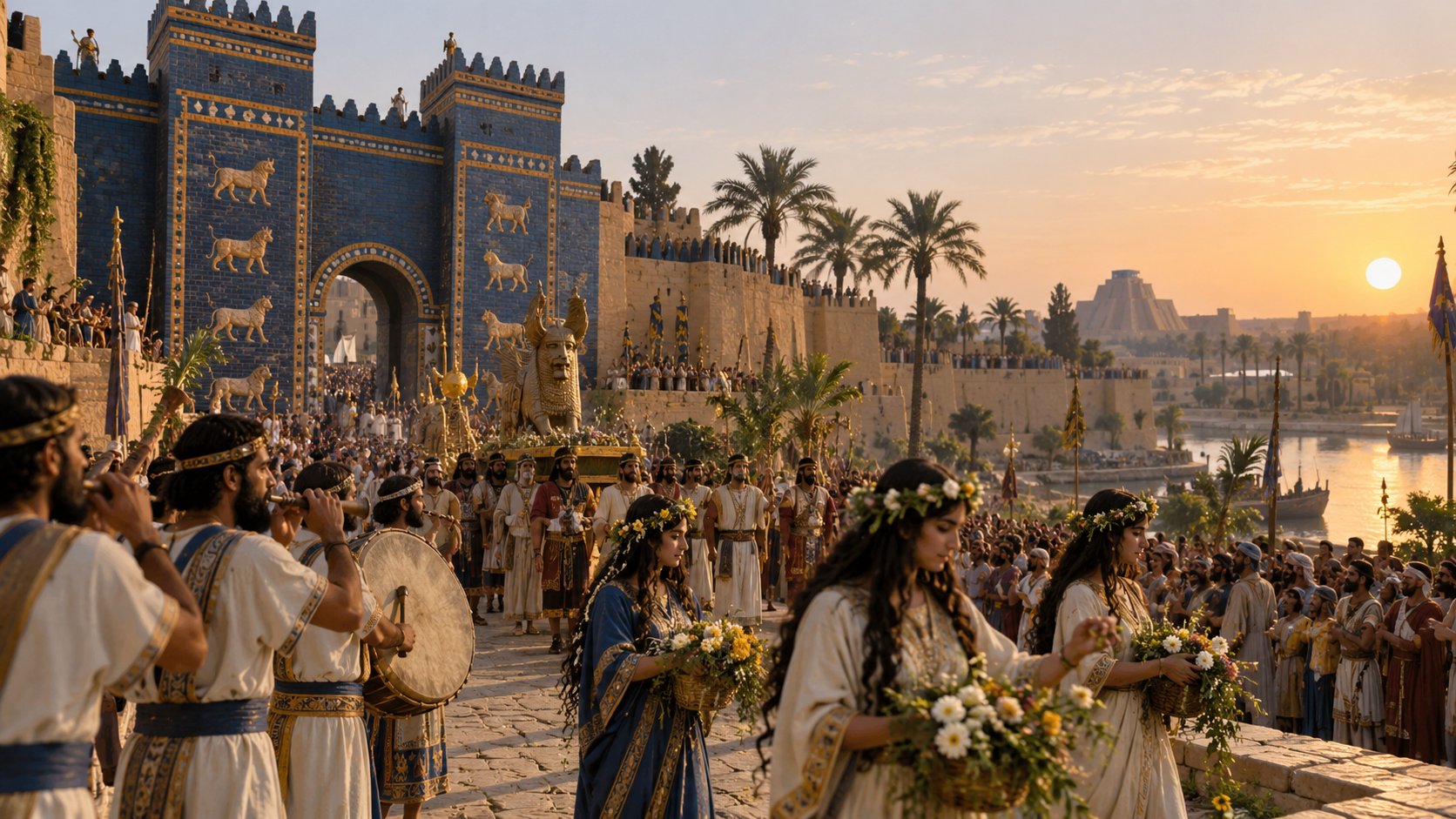
The name Akitu comes from the Sumerian a-ki-ti (barley-sowing festival) and the Akkadian akītu, referring to the spring rites tied to the barley harvest and the vernal equinox. Originally celebrated over twelve days in ancient Babylon, Nineveh, and Ashur, the festival honored regional patron deities—chiefly Marduk in Babylon, and Ashur and Ishtar in northern Mesopotamia.
During the classical Babylonian festival, the high priest recited invocations in the Esagila temple. On the fifth day, the king stood before the inner sanctuary stripped of his scepter, ring, and crown. The high priest struck the monarch across the face; if tears flowed, observers took it as an omen of prosperity, peace, and divine favor for the land.
The festival culminated in processions along stone causeways out to the suburban festival house (bīt akīti). There, the statues of the gods assembled to determine the Nam-tar, the destinies of the realm for the coming year.
In the 1950s, modern Assyrian scholars and cultural leaders anchored their calendar to 4750 BC, drawing on the earliest building layers of the temple of Ashur and northern Mesopotamian settlements. Because of this baseline, the April 1 New Year counts deep into antiquity, reaching milestone years like Akitu 6777.
Street Parades in Duhok and Ankawa
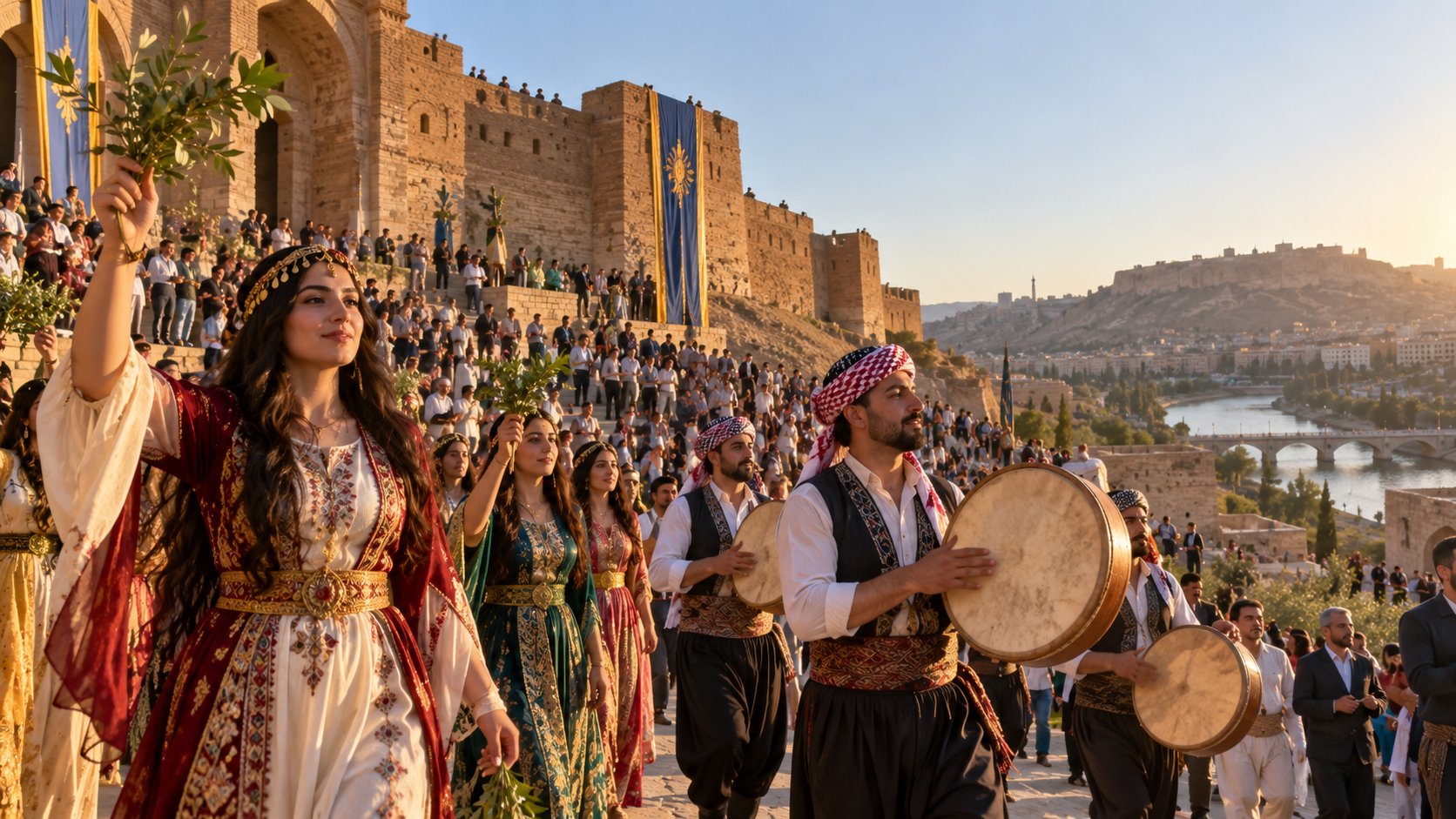
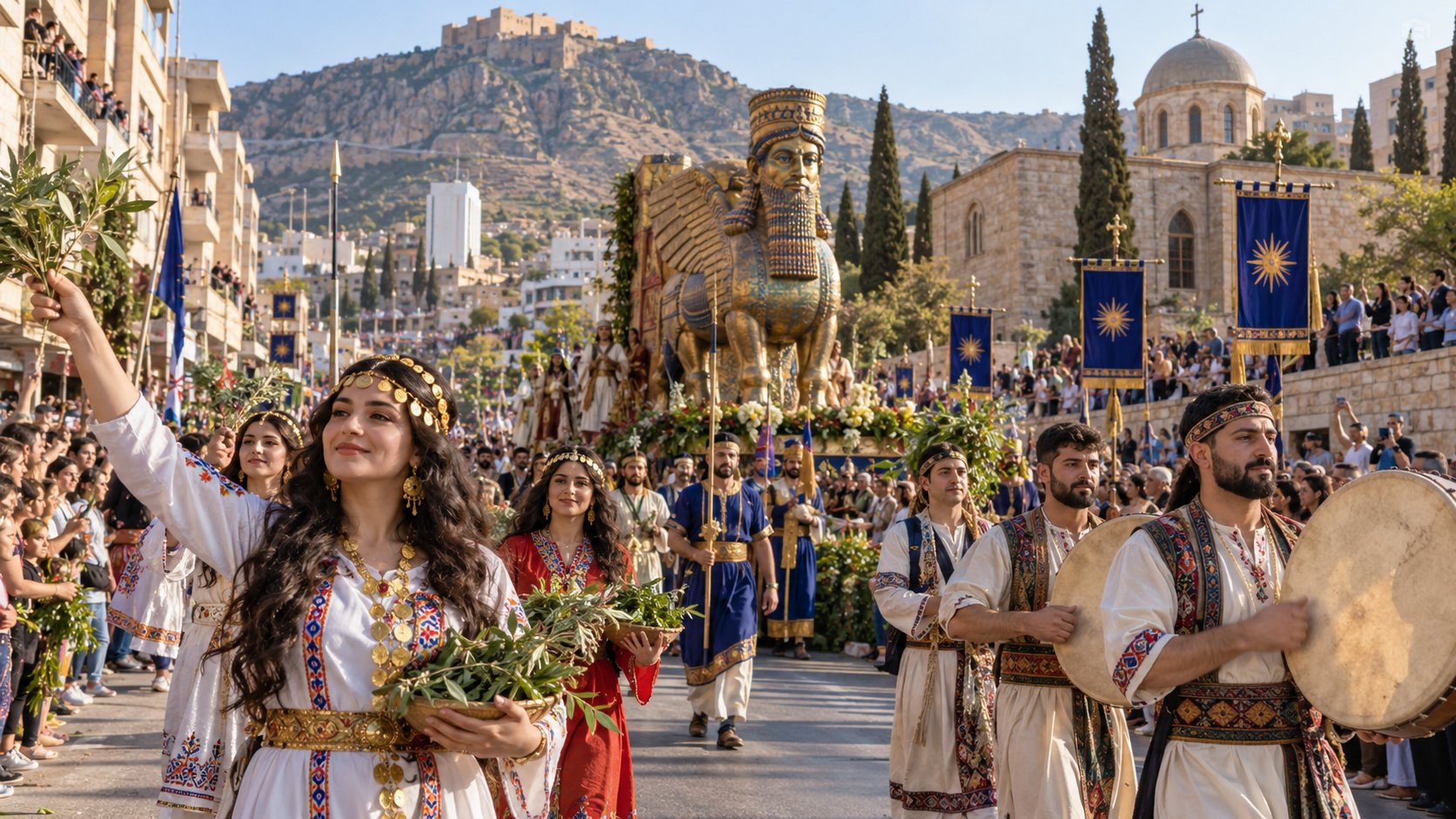
Modern street parades have turned Akitu into a prominent showcase of cultural identity. For much of the twentieth century, public displays of Assyrian culture faced strict suppression under state authority. Since the 1990s, however, public marches have become major annual fixtures in the Kurdistan Region of Iraq.
The primary hub is Duhok (Syriac: Nohadra), where tens of thousands walk the main boulevards. Marchers carry the Assyrian flag, adopted in 1968, with its four-pointed golden star and radiating wavy lines of blue, white, and red representing the Euphrates, Tigris, and Greater Zab rivers.
In Ankawa—the historical Christian district on the northern edge of Erbil—the day carries equal momentum. Ankawa sits near the ancient site of Milqia, once home to an Akitu temple dedicated to Ishtar. Today, local schools, youth organizations, and scout troops march through the streets playing brass horns and bagpipes.
Spectators crowd balconies, roofs, and storefronts, calling out "Akitu Brikha!" or "Reesha d’Sheeta Brikhta!" (Happy New Year). Costumed youths often portray historic figures such as Sargon, Sennacherib, Ashurbanipal, and Queen Shamiram (Semiramis).
Traditional Attire: Regional Embroidery and Silverwork
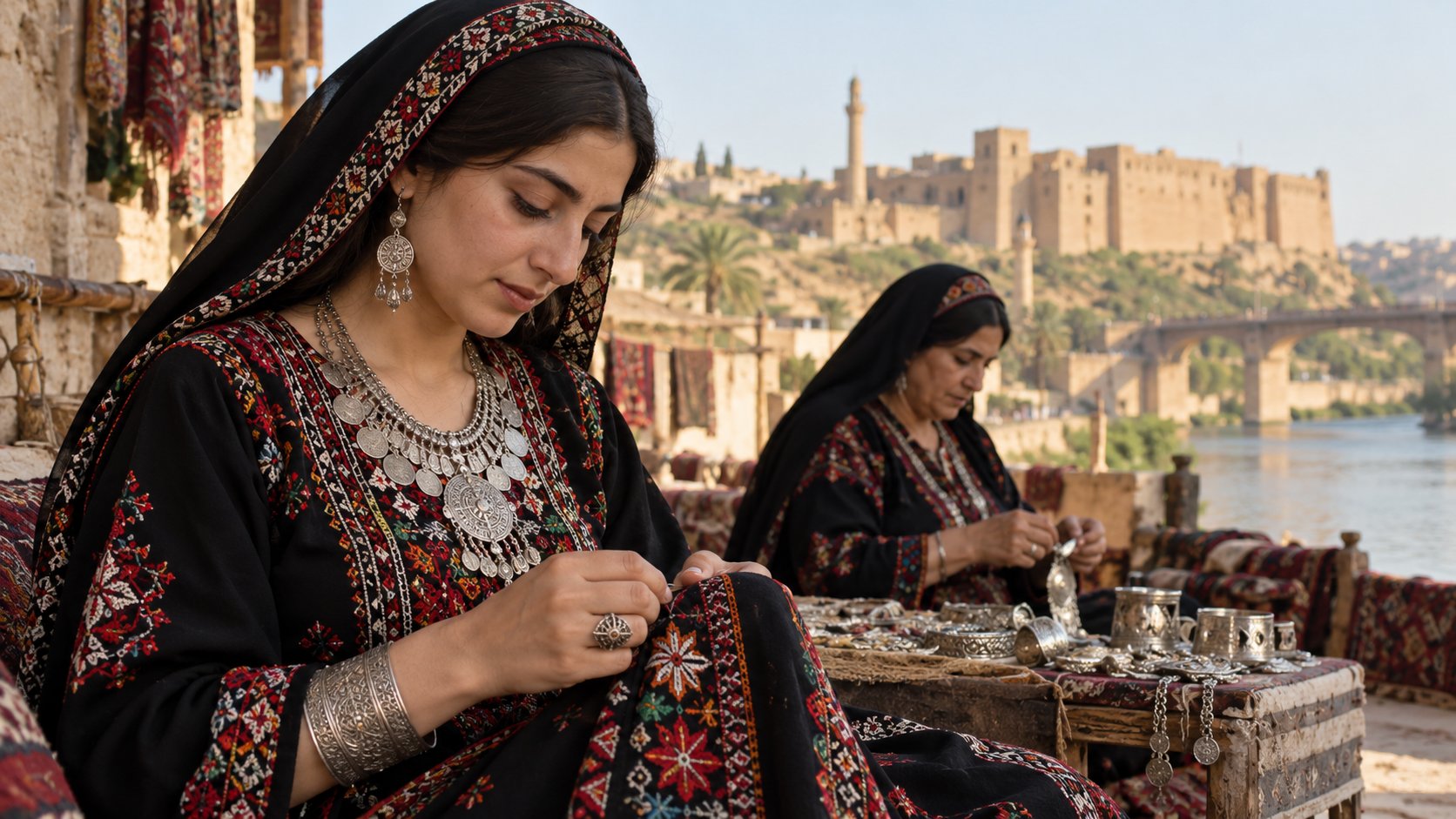
A striking part of Kha b-Nisan is the wide variety of traditional Assyrian dress worn by men, women, and children. The garments do not follow a single pattern; cut, embroidery, and headwear vary by ancestral district across the Nineveh Plains, Hakkari, Barwar, and Urmia.
- Embroidery and Fabrics: Women wear layered gowns made of velvet, satin, and brocade. Emerald greens, deep crimsons, royal blues, and gold reflect the spring wildflowers of the northern mountains.
- Silver Headpieces: Traditional headwear includes coin-trimmed caps (kofi), silver forehead chains, beaded scarves, and heirloom hairpins handed down through families.
- Men's Attire: Men wear loose wool or cotton trousers (chalvar or sharwale), fitted vests (kurtak), and wide fabric sashes wrapped around the waist. During parades, many wear conical felt caps (kosa) decorated with game-bird feathers.
- Spring Foliage: Revelers often pin wild poppies and fresh grass to their lapels to mark the start of the farming year.
Spring Renewal Rituals and Picnics
Beyond city parades, Akitu retains its ancestral role as an outdoor rite of spring:
- Deqna d-Nisan (The Beard of April): At dawn, families and young people in outlying towns walk into nearby meadows to gather dew-covered wild grass, herbs, and flowers. They tie these into small bundles and hang them over household doorways to invite good fortune for the new year.
- Community Picnics: Once morning parades wrap up in Duhok and Ankawa, families pack food and head into nearby river valleys and foothills. Smoke rises from roadside charcoal grills laden with lamb skewers, trays of dolma (stuffed grape leaves), flatbread, and fresh herbs.
- The Circle Dance (Khigga): Traditional Assyrian folk dance forms the heart of afternoon gatherings. Dancers link little fingers to form long, curving lines across parks and meadows. A lead dancer directs the line with an embroidered handkerchief (yalekhta) and a carved cane (qopala), keeping time with the davul (bass drum) and zurna (double-reed pipe). The tempo builds from steady communal walking steps into faster regional dances such as Gubbare and Siskany.
Practical Tips for Visitors
- Timing: While ancient Akitu lasted twelve days, modern public parades center on April 1 (Kha b-Nisan). Outdoor picnics, live concerts, and family gatherings continue through the first week of the month.
- Where to Go: Duhok hosts the largest single parade with tens of thousands of participants. Ankawa offers easily walkable street marches, brass bands, and neighborhood celebrations.
- Etiquette: Visitors receive a warm welcome. You do not need traditional clothes; bright, festive everyday wear is fine. Greeting people with "Akitu Brikha" goes a long way.
- Logistics: Expect road closures along parade routes in central Duhok and Ankawa from early morning until mid-afternoon on April 1. Plan local taxi rides and walking routes ahead of time.
Sources
- Wikipedia: Akitu (Accessed: April 2024)
- Wikipedia: Kha b-Nisan (Accessed: April 2024)
- Wikipedia: Assyrian Calendar (Accessed: April 2024)
- World History Encyclopedia: Festivals in Ancient Mesopotamia (Accessed: April 2024)
- Wikipedia: Ankawa (Accessed: April 2024)
- Wikipedia: Duhok (Accessed: April 2024)
- Wikipedia: Assyrian Folk Dance (Accessed: April 2024)
❓Frequently Asked Questions
Here are answers to frequently asked questions about the content above
The Assyrian calendar begins counting from 4750 BC, a foundational date established in the 1950s that commemorates the construction of the initial temple of Ashur and the dawn of ancient Mesopotamian civilization.
The core street parades and public festivities are celebrated annually on April 1, which corresponds to Kha b-Nisan (the first day of the ancient month of Nisan).
The largest and most prominent street parades take place in Duhok (known historically in Syriac as Beth Nohadra) and Ankawa, the historic Christian suburb of Erbil.
Deqna d-Nisan translates to 'the beard of April' or 'the beard of spring.' It is a traditional custom where villagers pick fresh spring greens and wild blossoms at dawn to hang above house entryways to invite prosperity.
The primary folk dance is the Khigga, an open circle dance where dancers link hands or pinkies and move in synchronized steps led by a head dancer carrying an ornamented handkerchief and cane.
Yes, visitors are warmly welcomed to watch the street parades in Duhok and Ankawa, join outdoor public picnics, and enjoy the live musical performances and traditional circle dances.