Inside Baghdad's traditional Ramadan ring tournaments, where neighborhoods like Kadhimiya and Adhamiya clash in historic cafes through bluffing and instinct.
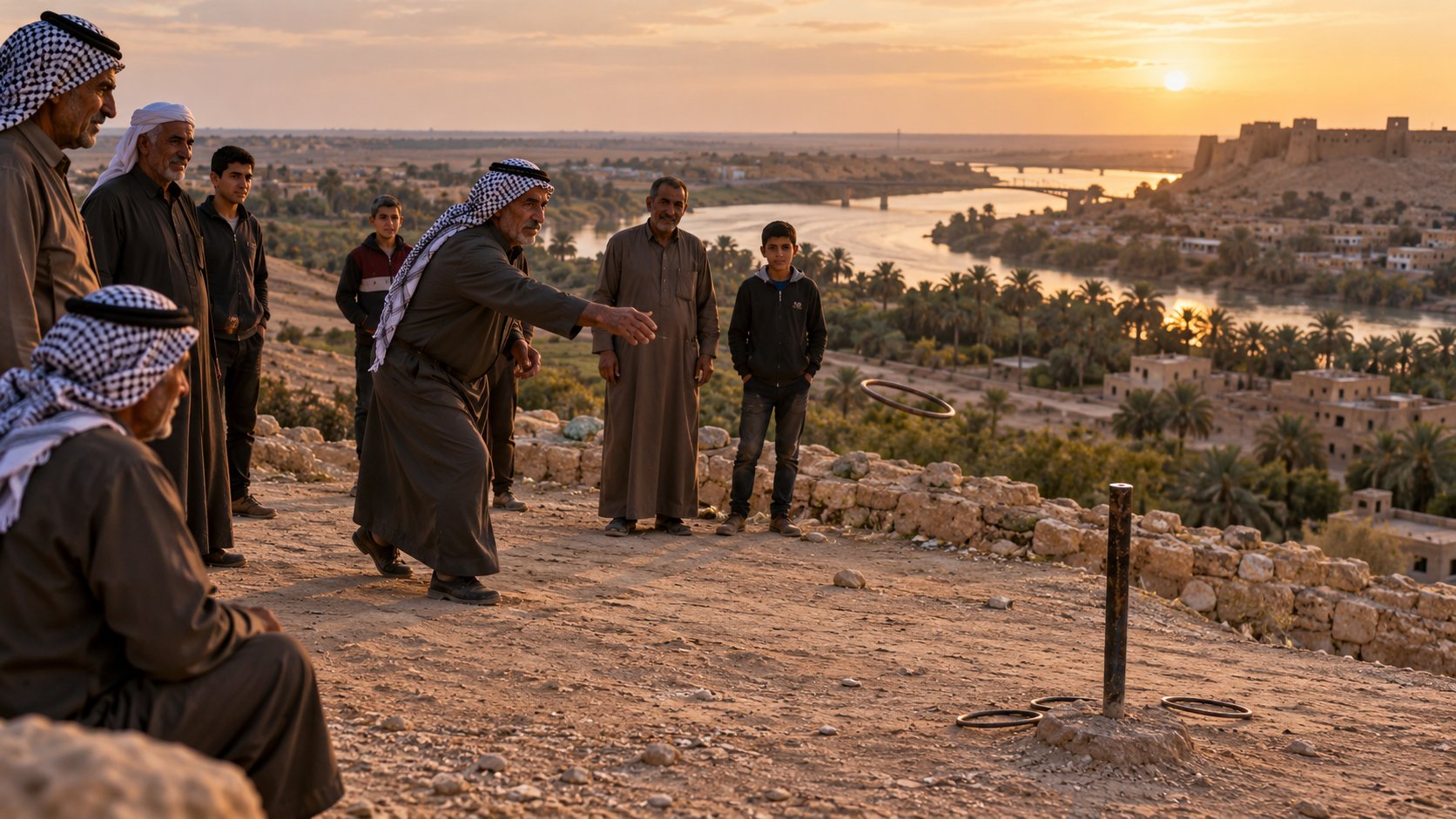
Baghdad after sunset in Ramadan stays wide awake. Once families finish the iftar meal and night prayers wrap up, the city fills with crowds heading to alleys, teahouses, cultural centers, and public arenas for a centuries-old game called Mhaibis (also spelled Mheibes).
Part psychological duel and part street theater, Mhaibis is Iraq's most famous traditional team sport. It centers on Baghdad's riverside districts of Kadhimiya and Adhamiya, where neighborhood teams square off in an intense match of bluffing, body language, and instinct.
The roots of the ring game
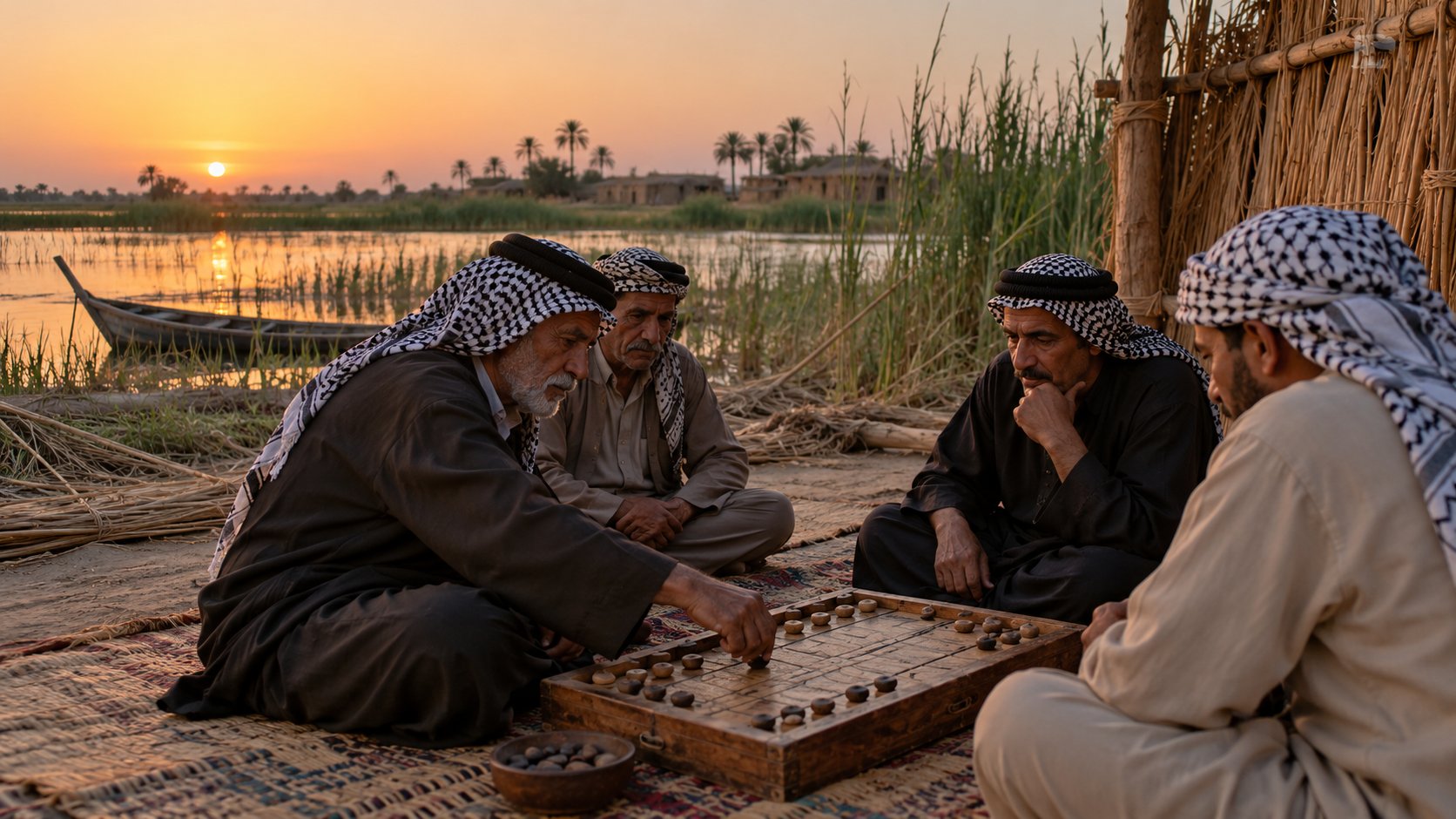
The game takes its name from mehbis, the Arabic word for a signet ring worn by Iraqi men. Iraqi folklore historian Adel al-Ardawi notes that written records of Mhaibis reach back to 16th-century Ottoman Baghdad, as reported by Al-Monitor. Over the centuries, casual street games turned into organized tournaments with clubs, formal rules, and interprovincial championships.
Football draws the largest crowds during the day, but Mhaibis owns the late hours of Ramadan. Jassem al-Aswad, longtime player and president of the Iraqi Mhaibis Federation, told The New Arab that Mhaibis is "a heritage game, the game of our ancestors, which unites all Iraqis."
Today, competitive Mhaibis includes nearly 400 teams across Iraq, with local qualifying rounds throughout Baghdad neighborhoods such as Kadhimiya, Adhamiya, Al-Karkh, Al-Rusafa, and Al-Mashtal.
How Mhaibis works
The core rule sounds simple: one team hides a ring, and the opposing seeker must figure out whose fist holds it. Across a full match, finding that ring demands sharp observation, calm nerves, and steady deduction.
- The concealment. Two teams of 20 to 40 players sit in long rows facing each other. The hiding team covers players' laps and hands with a long blanket or sheet. A distributor walks behind the cloth and slips the signet ring into one teammate's palm, keeping the transfer hidden from the opposing side.
- The straight face. Once the blanket drops, every player on the hiding team thrusts two clenched fists forward. No one flinches. Some stare straight ahead, others smile, and others hold tight eye contact to throw off the seeker.
- The search. The opposing team sends out its seeker, known in Iraqi Arabic as the tilib or mukraj. The seeker has ten minutes to inspect dozens of closed fists and pick out the ring.
- Elimination and the call of Bat. Seekers work by elimination. Walking along the line, the seeker orders suspected players to open both hands and drop out. If the seeker accidentally eliminates the player holding the ring, the hiding team shouts "Bat!" (meaning the ring has "slept" safely), scoring a point.
- The verdict. If the seeker clears away innocent players without hitting the ring, he makes a final call. He taps a specific fist and demands the player produce the ring. Guessing correctly wins the round, denies the hiders a point, and hands the ring to the seeker's side. Rounds repeat until one team reaches the target score, often deep into the night before the pre-dawn meal (suhur).
The rivalry between Kadhimiya and Adhamiya
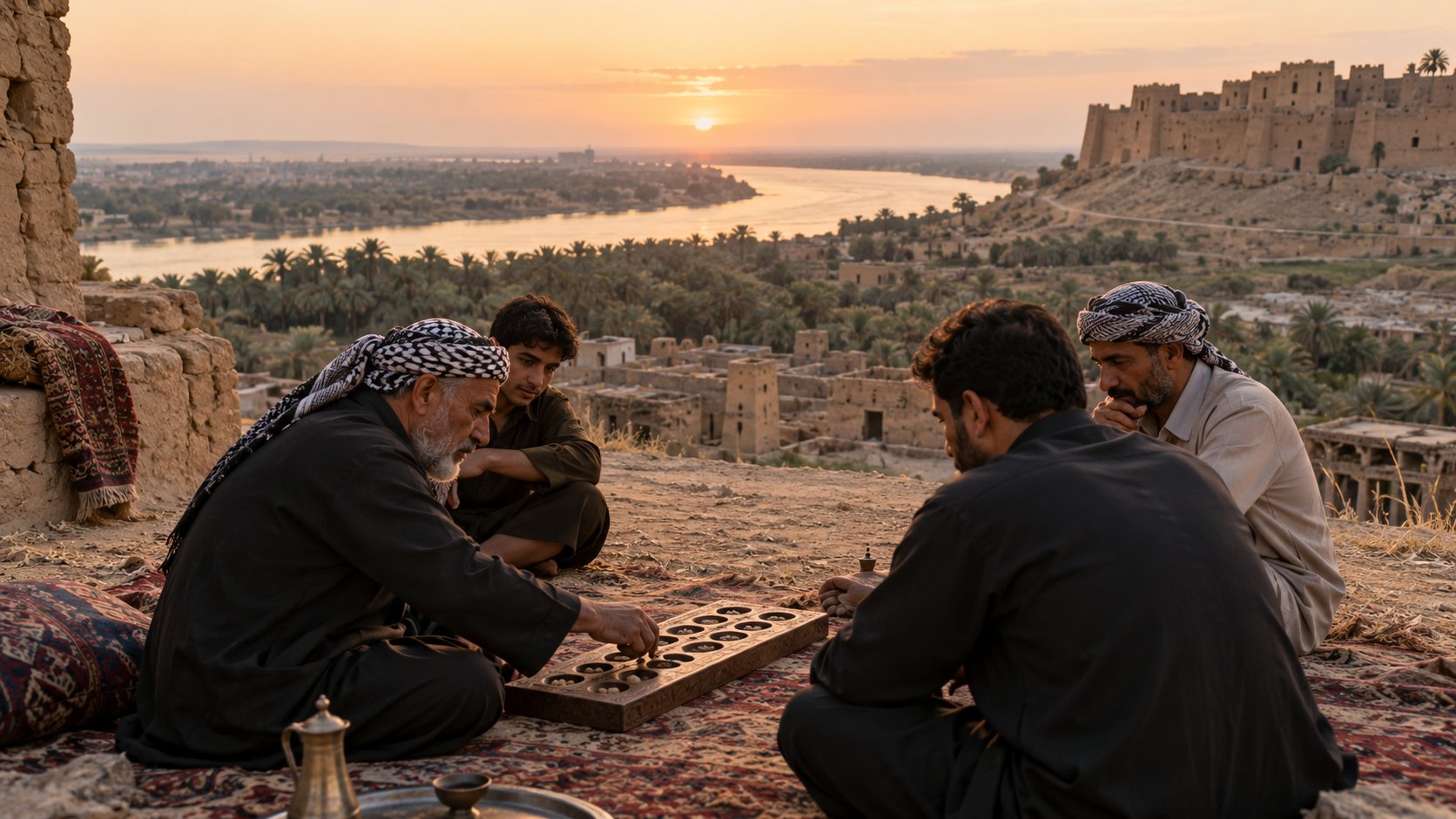
The game's strongest traditions run between Kadhimiya and Adhamiya, two historic Baghdad quarters facing each other across the Tigris. Their teams have met each Ramadan for decades.
During the sectarian conflicts of the mid-2000s, Mhaibis kept lines open between both banks. Kadhimiya captain Baqer al-Kazimi recalled in an interview with Kurdistan24 that players kept meeting even when violence closed nearby streets. Teams from Sunni Adhamiya and Shiite Kadhimiya even played on the Al-Aimmah Bridge between them, choosing competition and community over division.
Matches around the shrines and market squares draw players across generations. Older veterans who read telltale twitches sit beside young apprentices, pointing out how a pulse in the neck, a stiff knuckle, or a tiny shift in breath gives away the ring.
Experiencing Mhaibis in Baghdad's cafes
Visitors in Baghdad during Ramadan can drop into public tournaments easily.
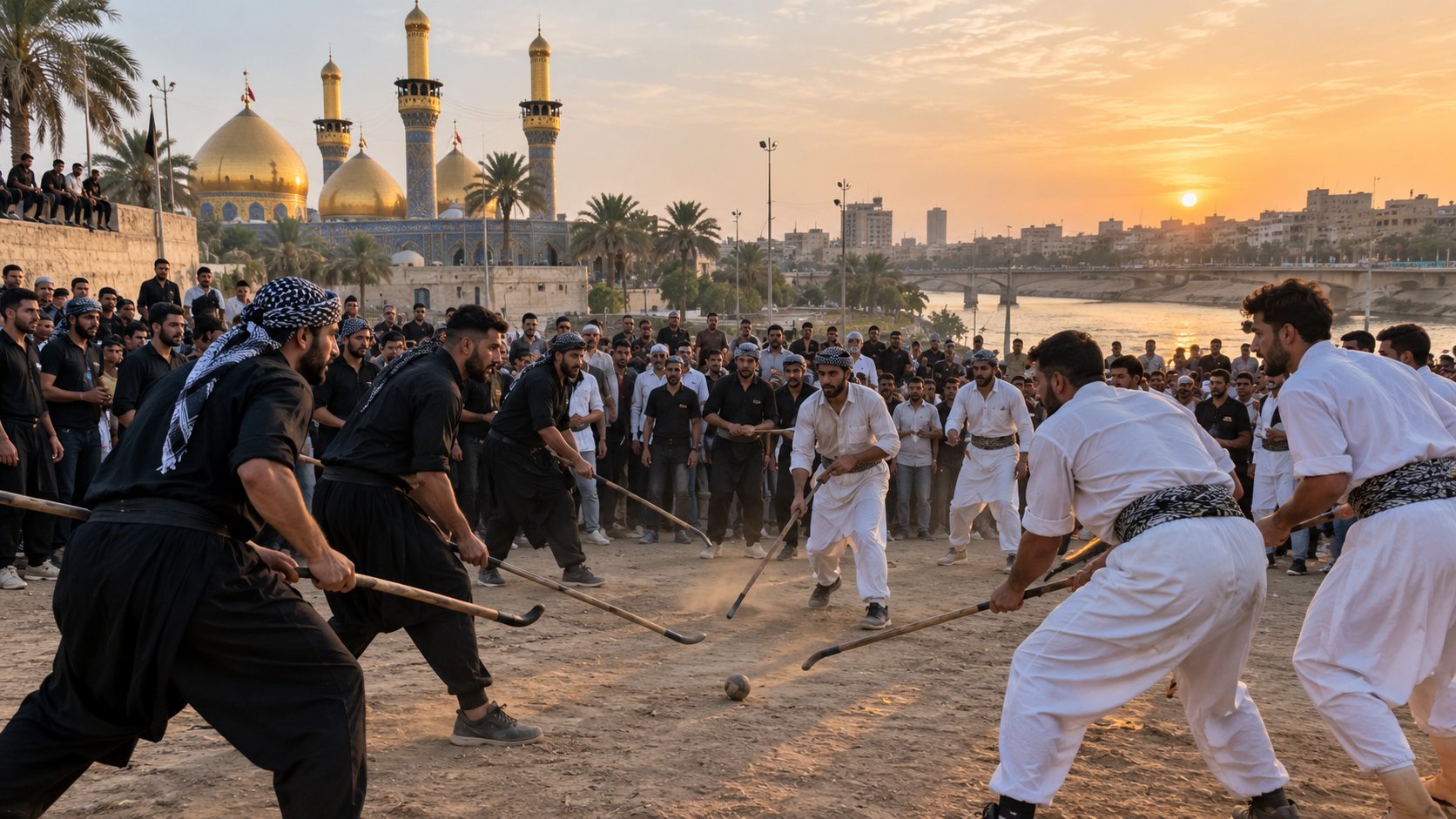
Matches are loud and social. As reported by Entrevue, games carry on with drum rhythms, chanted folk poems (hoshat), and spirited debates among spectators over blown calls. Servers pass around small glasses of hot cardamom tea, while trays of baklava and syrup-soaked zlabia arrive as games wrap up before dawn.
From neighborhood coffee shops in Kadhimiya to large halls at Baghdad's Al-Shaab complex, Mhaibis shows Baghdad at its most welcoming and alert.
Sources
- Al-Monitor: Salam Faraj, "Iraqis find Ramadan joy in centuries-old ring game", published March 22, 2025, https://www.al-monitor.com/originals/2025/03/iraqis-find-ramadan-joy-centuries-old-ring-game (Accessed: October 2026).
- The New Arab: Staff & Agencies, "Iraqis find Ramadan joy in centuries-old ring game Mheibes", published March 23, 2025, https://www.newarab.com/news/iraqis-find-ramadan-joy-centuries-old-ring-game-mheibes (Accessed: October 2026).
- Kurdistan24: AFP, "Iraqis Find Ramadan Joy in Centuries-Old Ring Game", published March 23, 2025, https://www.kurdistan24.net/en/story/831224 (Accessed: October 2026).
- Entrevue: News Service, "In Baghdad, the incredible game of the ring during Ramadan evenings", published March 24, 2025, https://entrevue.fr/en/a-bagdad-lincroyable-jeu-de-la-bague-pendant-les-soirees-du-ramadan/ (Accessed: October 2026).
- Wikipedia: "Mheibes", https://en.wikipedia.org/wiki/Mheibes (Accessed: October 2026).
❓Frequently Asked Questions
Here are answers to frequently asked questions about the content above
Mhaibis (or Mheibes) is a traditional Iraqi bluffing and deduction game played during Ramadan evenings, where two large teams compete to conceal and locate a small signet ring hidden in a player's clenched fist.
The game is played nightly throughout the holy month of Ramadan following iftar, taking place in historic neighborhood teahouses, community cultural centers, and public sports arenas across Iraq, notably in Baghdad districts like Kadhimiya and Adhamiya.
The guessing team's captain or seeker studies the facial expressions, breathing, eye contact, and body language of opposing players, methodically eliminating suspected non-holders before making a final accusation on a specific closed fist.
'Bat' is a traditional exclamation in Iraqi Arabic meaning 'slept over' or 'stayed the night', shouted in celebration by the hiding team when the seeker mistakenly eliminates the hand actually holding the ring.
Kadhimiya and Adhamiya are adjacent historic Baghdad quarters across the Tigris River whose storied rivalry came to symbolize Iraqi unity, famously continuing matches even on the connecting bridge during difficult years of sectarian division.
Yes, visitors traveling in Baghdad during Ramadan are welcomed at public cafes and arenas hosting Mhaibis matches, where spectators gather late into the night over tea and traditional sweets until suhur.